|
|
|
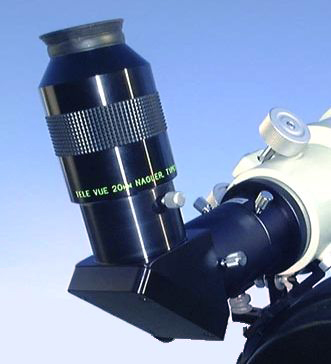
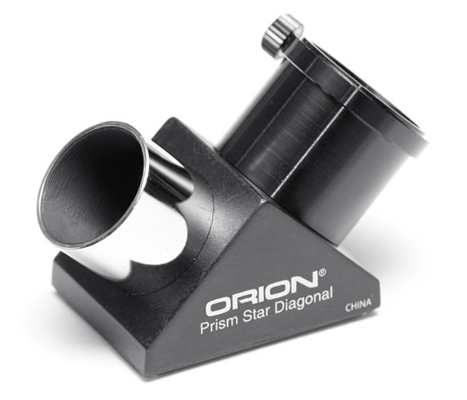
The best of the best star diagonals
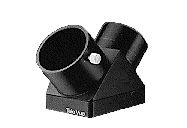
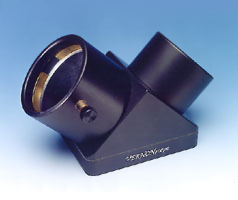
The reflective power As many observers, you have probably noted the poor quality of star diagonals supplied from factory with low-ends and mid-range scopes. The magic box hides an aluminum coated prism or a flat mirror at a few cents well unable to transmit all the incoming light falling from the stars. If it can be sufficient to show celestial objects to kids or a casual amateur, when high-resolution is wanted, a low optical quality is no more acceptable. Practically all optical systems through which the light has to pass through "keep" some percents of light and, if surfaces are not stricly flat and parallel, they also generate aberrations. But whatever can say some experts, even a 10 % light-loss is visible, like a surface polished vs. a rough one. The best solution to be sure that 100 % of the incident light is reflected without losses, distorsions and aberrations is using a high reflective surface offering, moreover, a high abrasive resistance to mechanical and chemical alterations (sand, moisture, etc). These star diagonals do not more use a prism but a mirror and are not coated with aluminum but rather with a dielectric coating. Ce document est disponible en français The prism, source of aberrations We all remember Newton's experiment on light and the fact that a prism diverges and split the white light in creating a rainbow. We also know that in a lens which is nothing else than a prism, the focus is different as a function of wavelength (the index of refraction varying as a function of this last) ; it is the well-known effect of the chromatic aberration that appears even if the optical surfaces are perfectly flat.
Also, a prism star diagonal introduces a spherical aberration into the wavefront due to a converging beam passing through a significant thickness of optical glass; the ray path at the edges of the beam is longer than the ray path at the center of the beam. This causes classical spherical aberration, even at a single wavelength. In addition, the spherical aberration is worse for lower focal ratio systems. It is also worse for a larger star diagonal due to a longer optical path length within the prism material. A prism diagonal is thus subject to both chromatic and spherical aberrations. Therefore manufacturers corrected these aberrations in remplacing the prism with a flat mirror. Indeed, a mirror star diagonal with a perfectly flat optical surface does not cause either spherical or chromatic aberration. Only drawback or issue to solve, its reflective coating must be as perfect as possible to prevent any light-loss and distortions. It is the challenge faced by manufacturers. Noticeable differences between diagonals Most star diagonals sold by major dealers between $50-100 provide good results, and slim the one who can perceive a difference between brands. However, compared to a dielectric coatings star diagonal, a standard aluminium coated diagonal cannot compete on planetary contrast. The sky for example is more black through a dielectric coatings diagonal than in any prism model, including the Meade 2" (50.8 mm). The image is also noticeable crisper than from the standard Celestron diagonal and sharper at high magnification. Still better, the collimation appears the same with a dielectric diagonal as it does when looking straight through the OTA of a SCT. The same could not be said using the standard prism diagonal supplied with Meade or Celestron's SCTs.
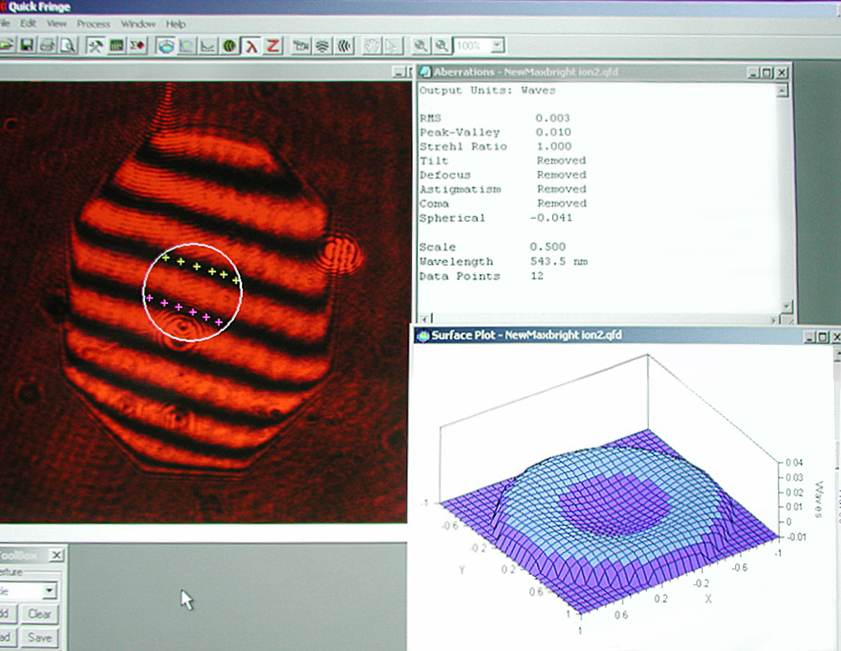
A difference can also be perceived using a long or a short focus scope. At f/12 for example, most diagonals perform well but horribly at f/6, even in high-end refractors. At last, in some occasions, using a Celestron C8 or a NexStar5 with a 0.63x reducer/corrector, observers related the collimation was thrown way off with the Tele Vue 2" star diagonal, slightly with the Meade but not with the one of Astro-Physics. In optical terms, nobody can really explain why some 2" diagonals are affected when reaching the end of back focus. We can blame the positioning of the mirror diagonal on its thin strips of foam - and Tele Vue accepts to replace the faulty mirror - but this means the performance of a reducer sometimes depends on a compromise with the 2" diagonal. Performances Several models of star diagonals share high appreciated characteristics like Astro-Physics, Intes, Lichtenknecker Optics or Tele Vue unit. All are mirror star diagonal protected with a dielectric coating and present a high reflectivity. Their flatness (wave surface) is ordinary higher than 1/10 wave (λ/10). The material is Sital and Zerodur with a thickness of 10 mm by 2" size.
The Tele Vue model called "Everbright" shows an average reflectivity of 99 % in white light from 400 to 700 nm. The Astro-Physics "Maxbright" is in all points similar to the Tele Vue with 99 % of reflectivity while the Lichtenknecker Optics star diagonal works only on their System 64 but presents the same performances too. The Intes Deluxe uses coatings reflecting 96 % of the light on the complete surface from one end to the other end and offers around 1/20 wave surface. Models reflecting 99 % offers 1/10 wave in the central area of the mirror only, which is the used area by high power. Williams Optics also sells dielectric star diagonals on quartz or Dura-Bright substrat offering 99 % of reflectivity and polished at 1/10 or 1/12 wave. Some other models present a 96 % of reflectivity, like the Intes standard with 1/15 wave accuracy or the old Brandon star diagonal. Last but not least, know that such star diagonals showing a 99 % of reflectivity are about six times more expensive than a 96 % overcoated enhanced model... But you don't really need a reflectivity better than 96 %. Indeed, at the edges of many 2" diagonals the field quality drop drastically and is even worse than the value listed in advertisings. Here also, except the price difference, a 96 or 99 % of reflectivity can not be easily perceived due to the eye's logarithmic response; most observers will not see the brightness difference. But knowing this, if one have the opportunity of buying a 99 % vs. a 96 % or a mirror at 1/10 wave vs. the same at 1/4, why to select the perfectible model, isn't it ? This debate is valid for everything so the question is relative and can eventually depend on your budget. Dielectric coatings The multilayer dielectric concept was developed by the US Army for mirrors optics used in desert warfare where blowing sand, grit or optics emersed in muddy water and then cleaning with a dirty rag would damage any other reflective coating. In fact these coatings are hard, even harder than the underlying glass (we can sometimes scratched). That technology has been refined by several commercial companies and is available to the amateur. First thing to know, dielectric means that it does not use metal contrary to usual coatings using e.g. aluminum. The metal being an electrical conductor, and absorbing partially radiations that he reemits in infrared at 10 microns, it is not suited for some activities like infrared astronomy. Dielectric coatings set down at least 50 layers or more where enhanced aluminum set down 10 or more layers. All coating are produced in a high vacuum chamber at 250°C while enhanced aluminum is coated under 100°C.
Tony Pirera who developed the dielectric diagonal for Astro-Physics and Tele Vue insists on the main advantage of these star diagonals : the mirror will have the same high 99 % reflectivity 10 years from now when most aluminium coated will have dropped well below 90 % and should be realumined. Markus Ludes from APM Telescopes confirms that testing reflection of good quartz protected aluminium coating showed after 10 years a reflection of about 83-85 %. You can even get a worse reflection value when using poor coatings after many years of use. Dielectric coatings are also extremely resistant and they don't degrade like aluminium. So, Thomas Baader from the famous german accessories showed to Roland Christen a dielectric diagonal coated at Leiboldt, Germany, and challenge him to scratch it by vigorous cleaning. But he couldn't. Using excellent diagonals like the Maxbright for example, you can cleaned it repeatedly without developing a multiple of pinholes and sleeks. The same cannot be said of any aluminium coated diagonal, enhanced, protected or whatever.
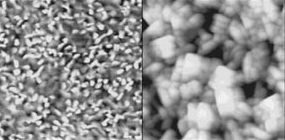
Even protected with a silica layer, "Enhanced" or not, aluminium coatings are very soft and do not stand up to repeated cleaning. As an added bonus, the dielectric coatings have much less scatter than any deposited aluminium coating. According to Astro-Physics, examination with a laser shows approximately a 5 fold improvement in surface scatter. This is because the aluminium layer consists of a series of droplets on the order of a wavelength of light that scatter it. On the contrary, dielectric coatings are multiple layers of thin film oxides made of very small particles deposited by an electron beam evaporator at a high temperature on the surface. At last, dielectric coated mirrors must not be serviced as the coatings cannot be removed. To remove this coating requires repolishing of the surface, and refiguring the surface if it is not exactly flat or spherical. So after have worked with these diagonals, Roland Christen can say that they are as close as anything to having nothing between the objective and the eyepiece. Like many advanced users I confirm his opinion. I thank Roland Christen from Astro-Physics, Tony Pirera from Spectrum Thin Films, Markus Ludes from APM Telescopes and Norm Page from NASA/JPL (ret.) for their comments and corrections. You will find more explanations about coatings in this French pages. For more information Mirrors vs. Dielectric vs. Prism Diagonal Comparison, William Paolini, Baader Planetarium, 2014 (PDF) |
|||||||||||||||||||||||||||||||||